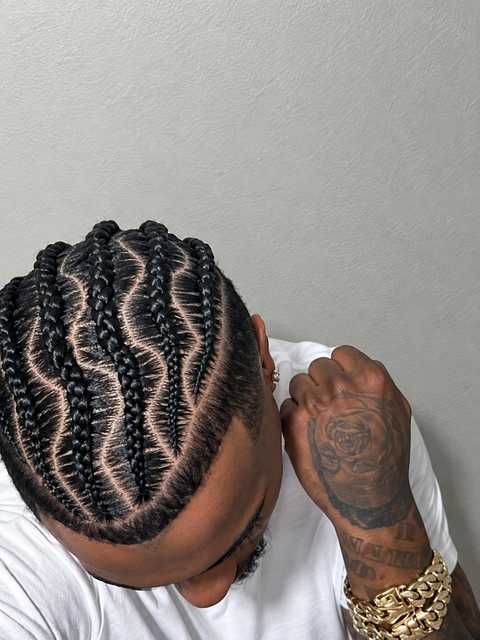
How cornrows are made
Cornrows are created by weaving hair close to the scalp in continuous, raised rows. The stylist sections hair into patterns and feeds strands into each braid, controlling tension to shape the design. On appointment day the process is manual and incremental; the exact number and width of rows determine time and finish.
Clients should expect a step-by-step approach: a short consultation, careful parting, and section-by-section braiding. Because Cape-coral's humid climate and local activity levels influence surface texture, your stylist will balance tension and neatness to achieve an appearance that suits daily routines and comfort.
What shapes the result
Texture, density and previous chemical or mechanical processing are primary factors that affect how cornrows look and hold up. Thicker, coarser hair often holds a crisp parting longer, while finer or softer hair tends to show frizz sooner. These material differences guide choices about braid width and pattern complexity.
Trade-offs matter: tighter braids typically last longer but can increase scalp tension, while looser braids are gentler but may require more frequent touch-ups. Commuting from Fort Myers across the bridges, weekend schedules, and outdoor activities common in this area all influence design and maintenance choices clients make.
Care and upkeep locally
Maintenance decisions should reflect Cape-coral’s subtropical weather—humidity and afternoon storms can soften edges and increase frizz. Simple upkeep like nightly covers, gentle moisturizing, and avoiding heavy soaking after fresh braiding can extend visual neatness without altering the basic technique.
Studio logistics also affect the experience: the salon is near Del Prado and Cape Coral Parkway, making it convenient for regional clients. Consider travel time, parking, and whether you need an evening or weekend appointment when booking, since local commuters and seasonal residents often prefer flexible scheduling.